
Default card values
These are the common 13-card values used across Indian rummy apps. Always confirm the table screen; some rooms cap a losing hand.
| Cards | Typical points | Notes |
|---|---|---|
| J, Q, K | 10 each | Face cards |
| Ace | 10 | Often 10 when unmatched; A-2-3 still used as a low run |
| 2–10 pip cards | Face value | 7♣ = 7 |
| Printed / wild joker | 0 | When grouped correctly |
Drops and invalid declare
| Action | Common penalty |
|---|---|
| First drop | 20 |
| Middle drop | 40 |
| Unmatched cards after a valid opponent declare | Sum of deadwood, often capped at 80 |
| Invalid declaration | Often the maximum (80) or a table-specific fine |
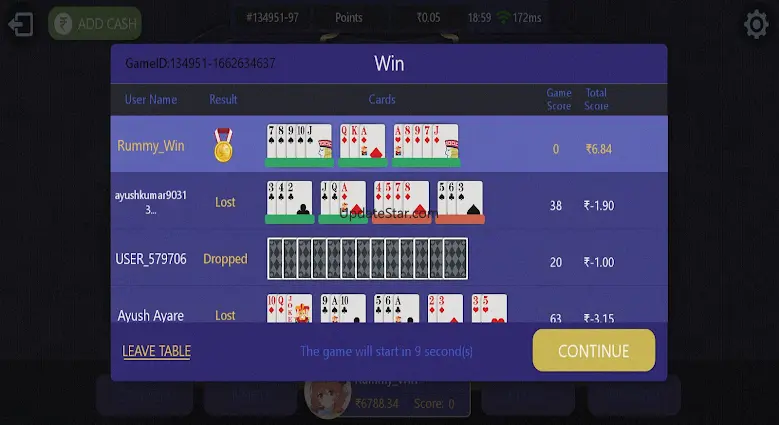
What changes by format
- Points Rummy: one deal; the winner usually collects points × stake. A missing pure sequence typically scores the maximum.
- Pool 101 / 201: points add up until you cross the threshold and are eliminated. A single cheap drop can still save a session.
- Deals Rummy: a fixed number of deals; chips or points carry. Leaving mid-session has its own forfeit.
Scoring is not a “trick to win cash”. It is bookkeeping. Practise grouping on a physical deck; this website does not run live tables.